

CUSTOMER
Seaforth Geosurveys
LOCATION
Nunavut, Canada
PROJECT
Moving vessel sound velocity profiling for a complex Arctic survey

Project overview
Seaforth Geosurveys has spent over 30 years delivering innovative offshore survey, geotechnical and site characterisation solutions in some of the world’s most challenging environments. From coastal waters to deep ocean settings, Seaforth’s integrated approach, proven offshore capability and uncompromising focus on quality give clients the confidence to make critical, data-driven decisions.
Seaforth Geosurveys was contracted to deliver a high-resolution pre-engineering geophysical and geotechnical survey to confirm or amend a proposed route for the installation of a fibre-optic telecommunications system connecting remote communities in Nunavut, Canada. The remote location and reduced seasonal operational window meant the Seaforth team had to ensure the project was well planned and executed efficiently, with limited margin for disruption.
Challenges faced
Seaforth Geosurveys recognised that traditional sound velocity profile (SVP) acquisition, pausing survey operations to recover towed sensors, would cause significant time loss across the campaign. With multiple sensors deployed and a high volume of SVP casts required, these interruptions threatened to slow progress.
During planning, the team identified that a moving vessel sound velocity profiling (MVP) solution was essential to save vessel time and mitigate schedule risk. Existing market options had been trialled, but none met the project’s operational demands.
Additional constraints included limited deck space, Arctic conditions and the remote location, where equipment failure could cause major delays. A reliable, fully integrated solution was needed to acquire accurate, full water column SVPs without disrupting ongoing survey operations.

Technical expertise
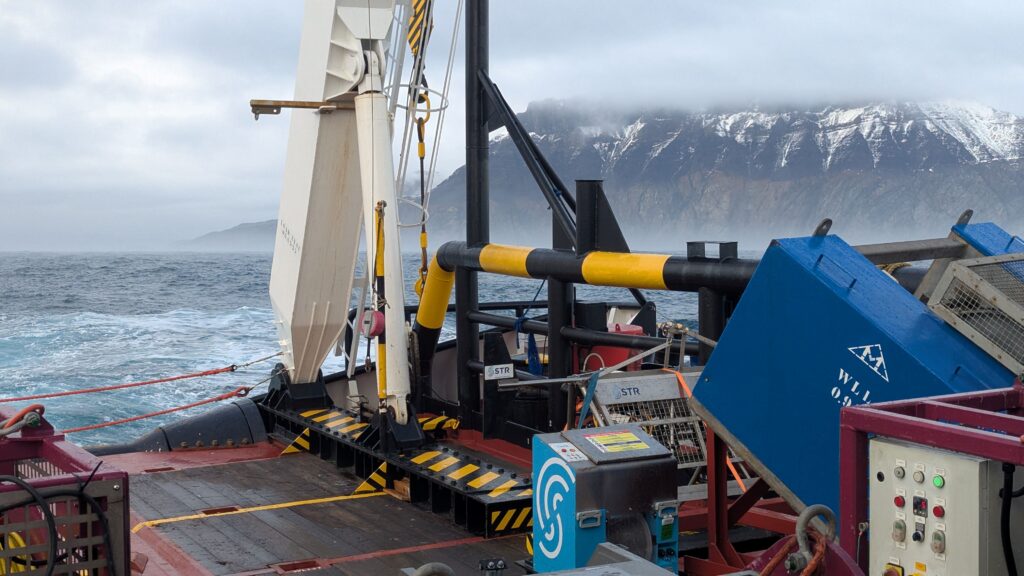
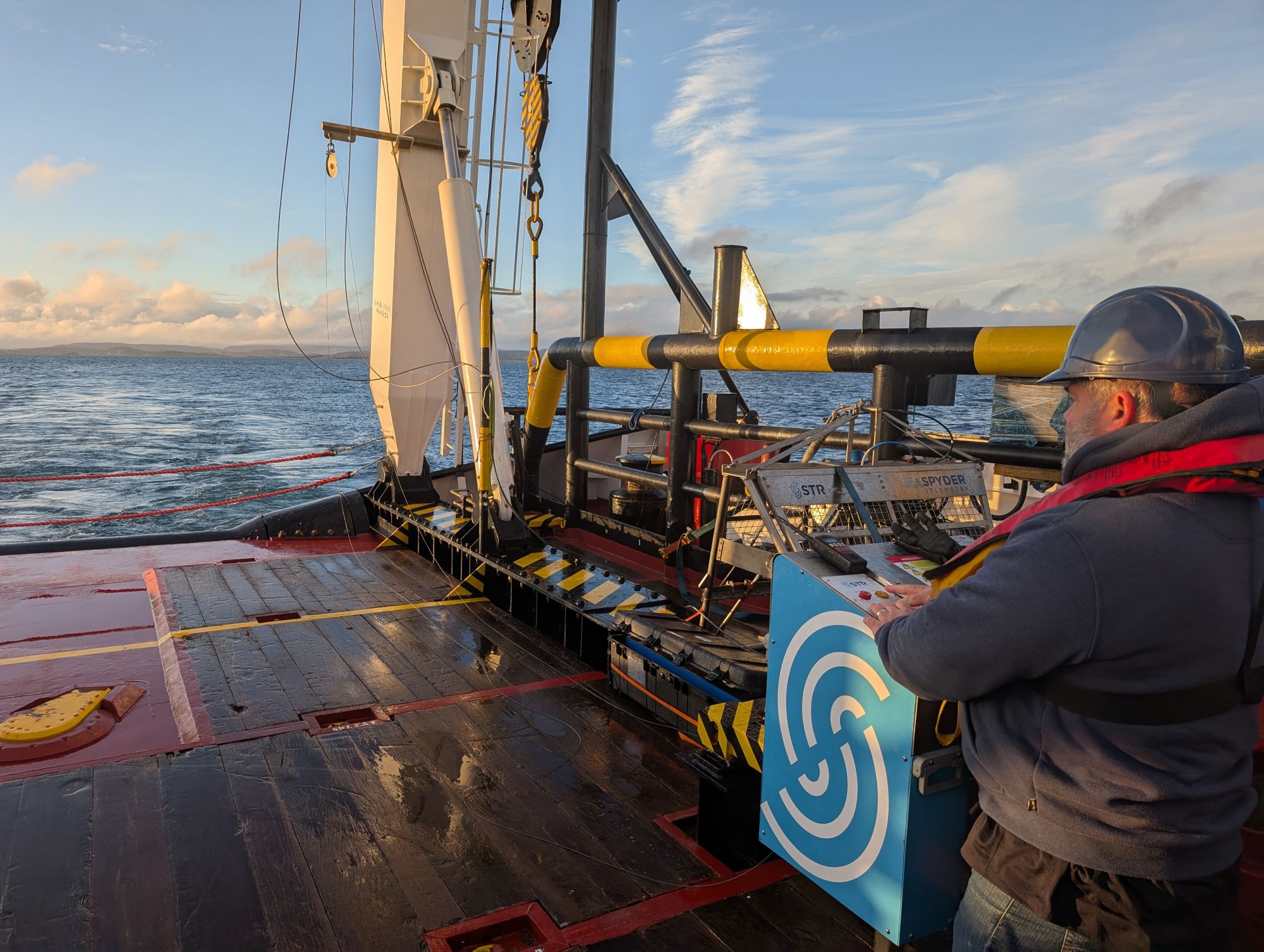
Seaforth Geosurveys and STR have a long-standing partnership built on shared values of innovation, quality and operational excellence. For this project, Seaforth chose to deploy the STR SeaCast system, a compact yet robust moving vessel sound velocity profiler designed to acquire full water column SVPs without pausing survey operations.
SeaCast’s self-contained winch, lightweight steel-armoured cable and intuitive control software enabled rapid mobilisation and straightforward integration into Seaforth’s vessel setup. While underway, the system collected real-time sound velocity data, eliminating the need to recover towed sensors for conventional SVP casts.
Features such as automated deployment, real-time data visualisation, altitude monitoring, and seafloor collision avoidance helped maintain data quality and protect equipment in Arctic conditions. STR’s technical expertise and operational support ensured the system performed reliably throughout the campaign, allowing Seaforth to focus on efficient data acquisition and survey progress.
Project success
The SeaCast system enabled Seaforth to maintain continuous survey operations while collecting complete SVPs. Across the campaign, over 200 SVP casts were completed without pausing the vessel, recovering several hours of vessel time per day compared with traditional stop-and-cast methods, reducing schedule risk and supporting consistent productivity within a constrained Arctic season.
As Seaforth expands its Arctic presence across multiple sectors and clients, the remote and often harsh environment demands highly reliable and functional technical solutions to facilitate successful project execution. STR has been a highly trusted supply chain partner, working closely with the Seaforth team to ensure we achieve our project objectives time and time again. With the new and innovative SeaCast system mobilized on Seaforth’s survey vessel Mainport Geo, we were able to complete a 60+ day Arctic campaign on time and on budget. STR continues to demonstrate their commitment to excellence in technical solutions, support and innovation.”
– David Lombardi – Seaforth President & CEO
Seaforth highlighted SeaCast’s balance of portability and robustness, bridging the gap between large, permanently installed systems and more fragile portable alternatives. Real-time data visualisation also allowed operators to confirm full water column coverage during each cast, minimising the risk of incomplete profiles or repeat deployments.
Overall, the solution helped Seaforth sustain survey momentum, manage schedule pressures effectively and successfully complete the campaign on time.
“SeaCast delivered exactly what this project demanded – reliable, full water column SVP acquisition without interrupting survey operations. In a remote Arctic environment with a very limited seasonal survey window, that ability to maintain momentum, save vessel time and reduce schedule risk was an important contributor to the campaign’s success.”
Randy Mullins
Region Director – AMEA